

News
-

Why Do Electric Motors Need Space Heaters? Preventing Condensation and Protecting Insulation
Electric motors are often installed in environments where humidity, temperature fluctuations, and long periods of inactivity can affect their reliability. One common but easily overlooked risk is condensation inside the motor. A motor space heater is a simple yet effective accessory designed to h...Read More -

Why Is Rotor Temperature Rise Important in High-Voltage Motors?
When discussing motor temperature, many people naturally focus on the stator winding. This is understandable because stator winding temperature can usually be monitored directly using embedded temperature sensors such as RTDs. However, in large high-voltage induction motors, engineers also pay cl...Read More -
Differential CT vs. Core Balance CT: Key Differences in Motor Protection
In medium- and high-voltage motor protection systems, Current Transformers (CTs) are important components used to provide current signals for protection and monitoring devices. In practical motor projects, customers may encounter terms such as Differential CT and Core Balance CT (CBCT). Although...Read More -

Can a 50Hz Industrial Frequency Motor Be Used with a VFD?
With the growing popularity of variable frequency drive applications, customers often ask: can I use my existing 50Hz industrial frequency motor directly with a VFD for speed control? The answer depends on the specific operating conditions and cannot be given as a simple “yes” or R...Read More -

Why Do Large Motors Mostly Use Forced Ventilation?
1. Overview of Common Cooling Structures In the design of motor cooling systems, different power ratings typically adopt different approaches: Small and medium-sized industrial-frequency motors generally use self-ventilation, relying on components such as the rotor-mounted fan to dissipate heat d...Read More -

Driven by Decarbonization and Smart Manufacturing: High-Voltage VFDs Power Heavy Industry Beyond Energy Bottlenecks
[Industry Insight] Amid the global push for industrial decarbonization and digital transformation, high-voltage motors—the primary power source in heavy industry—directly dictate operational costs and sustainability milestones. High-Voltage Variable Frequency Drives (HV VFDs) are rapidl...Read More -

Difference Between Increased Safety and Flameproof Terminal Boxes for Explosion-Proof Electric Motors
Terminal boxes are core safety components of explosion-proof electric motors, determining whether motor wiring sections can reliably avoid igniting flammable gas and dust in hazardous industrial environments. The two mainstream designs shown in engineering drawings are increased safety (Ex eb, EA...Read More -

What Information Should You Provide When Ordering an Industrial Motor?
When requesting an industrial motor quotation, many customers only provide basic information such as motor power, voltage, and speed. However, selecting the right motor requires much more than these basic parameters. A motor with the same power rating may not always be a suitable replacement. Dif...Read More -

Relationship Between No-Load Current and Number of Poles in Motors of Equal Power
For a three-phase asynchronous motor, the relationship between rated power, voltage, and current is expressed as: P = √3 × U_N × I_N × η × cosϕ When the rated power and voltage are kept constant, the magnitude of the rated current is determined by the motor’s efficiency (η) and power factor...Read More -

High-Voltage Motor Safety Grounding and Short-Circuit Withstand Requirements (Covering Terminal Box Short-Circuit Withstand and Neutral Grounding Practices)
1. Introduction In medium and high-voltage induction motor systems, safety performance is not determined only by electrical parameters such as rated power or insulation level. Mechanical integrity under fault conditions and system grounding configuration are equally critical. Two parameters fre...Read More -
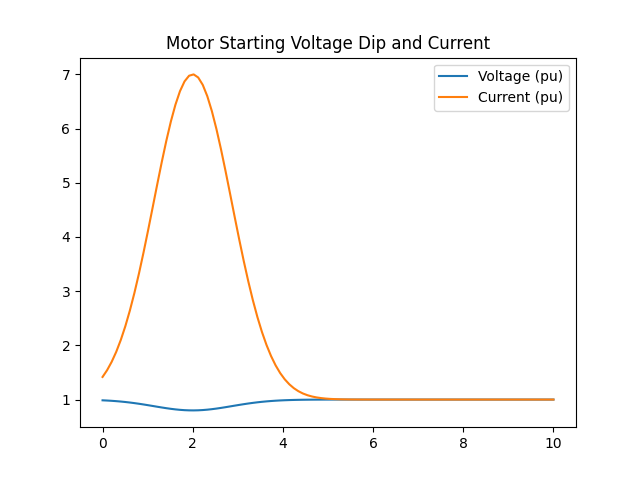
Motor Starting Parameters Explained: 5.5 pu vs 6.5 pu Locked Rotor Current
Recent inquiries from customers, system integrators, and overseas project designers have highlighted recurring questions regarding induction motor starting performance, particularly the interpretation and selection of locked rotor current levels such as 5.5 pu and 6.5 pu. In many technical speci...Read More -

How High Vibration of Load Equipment Damages Motors & Motor Bearings: Causes, Hazards & Solutions
High vibration transmitted from fans, crushers, pumps and other industrial loads is a common hidden fault for industrial motors. Most plant maintenance teams only monitor motor temperature and current, ignoring continuous vibration from connected loads. Long-term abnormal vibration mainly damages...Read More